Winter Olympics — Italy’s Alpine Promise on the World Stage
Kevin Love withdraws from US men's basketball team ahead of Tokyo Olympics/ credit Reuters
Winter Olympics — Italy’s Alpine Promise on the World Stage
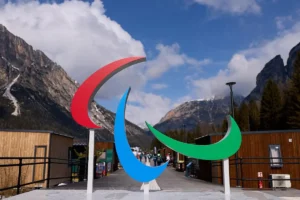
CORTINA, ITA– February 2026, the world’s winter sports spotlight will settle on northern Italy as Milan and Cortina d’Ampezzo jointly host the XXV Olympic Winter Games.
Branded as Milano Cortina 2026, the Games represent a modern vision of the Olympics the country’s first Winter Olympics since Turin 2006 and Cortina’s second appearance after its historic role in 1956.
More than a sporting event, the 2026 Winter Olympics aim to redefine how large-scale global competitions are planned, built, and experienced in the 21st century.
The 2026 Winter Olympics reflected a changing Olympic landscape. Rising costs and public resistance had led several cities to withdraw early, leaving Milan–Cortina competing primarily against Stockholm–Åre. In June 2019, the International Olympic Committee awarded the Games to Italy, citing strong public support, existing infrastructure, and a clear sustainability plan.
A key strength of the bid was its decentralized model. Instead of constructing an entirely new Olympic city, events would be spread across multiple regions, reducing financial risk and environmental impact. This approach aligned closely with the IOC’s Olympic Agenda 2020 reforms.
Development and preparations
Preparation for the Games has focused on upgrading existing venues rather than building from scratch. Historic sites like Cortina’s alpine slopes are being modernized, while Milan is developing new urban infrastructure tied to long-term community use. The Olympic Village in Milan is planned to transition into student housing after the Games, reinforcing the legacy-first philosophy.
Transportation upgrades across Lombardy and the Veneto are also central to preparations, ensuring smooth connectivity between dispersed venues. While timelines have been tight, Italian organizers have emphasized transparency and steady progress.
The Games
The 2026 Winter Olympics will feature 16 disciplines across 8 sports, including alpine skiing, figure skating, ice hockey, snowboarding, and Nordic combined. Events will take place in Milan, Cortina d’Ampezzo, Bormio, Livigno, Predazzo, and Anterselva, showcasing Italy’s diverse geography—from fashion capital to high-altitude mountain towns.
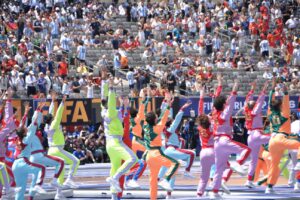
Opening ceremonies are scheduled for Milan’s iconic San Siro Stadium, while the closing ceremony will take place in Verona’s ancient Roman Arena, creating a symbolic bridge between modern sport and classical history.
Participating National Olympic Committees
More than 90 National Olympic Committees (NOCs) are expected to participate, with approximately 3,000 athletes competing. Traditional winter sports powerhouses such as Norway, Germany, the United States, Canada, and Japan will be joined by emerging nations investing heavily in winter athletics.
The Games continue the Olympic trend of broader inclusion, with increased gender balance and expanded opportunities for smaller delegations to compete on the global stage.
Tommaso Cioni: The Quiet Rise of a Modern Italian Footballer
Italian football has always been loud in its legends. Names like Maldini, Pirlo, and Del Piero echo through history with thunder. Yet between those roars, Italy has often produced a different kind of player—one who rises quietly, patiently, and with discipline rather than spectacle. Tommaso Cioni belongs to that quieter tradition.
US Navy Shoots Down Iranian Drone in Arabian Sea
The United States Navy has reportedly shot down an Iranian drone flying over the Arabian Sea, marking another flashpoint in the already tense relationship between Washington and Tehran. The incident underscores the fragile security situation in one of the world’s most strategically important maritime regions, where global energy supplies, international shipping routes, and military interests intersect.
Top 5 Teams With Most Drop Catches in WPL 2026
Fielding is a very important part of cricket, especially in the Women’s Premier League (WPL) 2026. Dropped catches can completely change the outcome of a match, costing teams valuable runs or breaking their momentum. Some teams managed to hold onto most chances, while others struggled in crucial moments.
Letter to the Lonely
Attention This is a message to those who are ALONE: Studies indicate that social isolation poses a legitimate risk to YOUR physical and mental health
Elections to the IOC Ethics Commission
The Session elected HE Ms Patricia O’Brien as Chair of the IOC Ethics Commission for a four-year term. A former UN Under-Secretary-General for Legal Affairs, Ms O’Brien is an independent personality who is not an active, honorary, honour or former IOC Member. She has served as Interim Chair of the Commission since her appointment in June 2025.
The Session also elected two new Ethics Commission members for a four-year term:
Mr Karl Stoss, in his capacity as an IOC Member.
HE Mr Kim Won-Soo, former Korean Ambassador and former UN Under-Secretary-General, as an independent personality not linked to IOC membership.
Additionally, the Session re-elected two current members of the Commission:
Ms Auvita Rapilla, for a four-year term in her capacity as an IOC Member.
Mr Pau Gasol, in his capacity as an IOC Member and representative of the IOC AC, until the end of his current term.
In taking these membership decisions, the Session followed the recommendations of the IOC EB.
About The Author