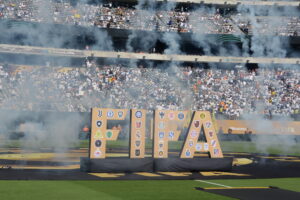
UEFA nations agree to boycott World Cups over FIFA’s private investment plans
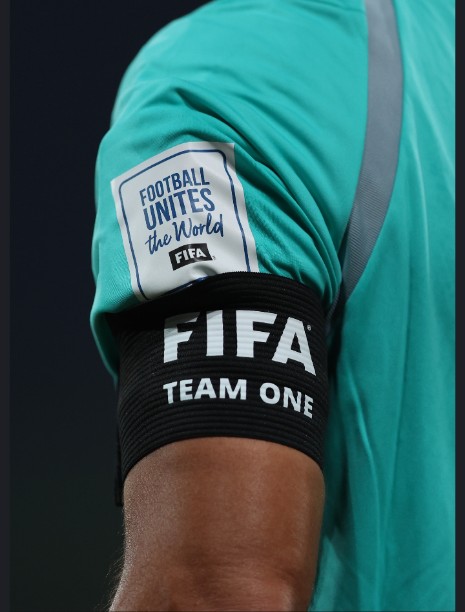
The global governance of professional football has entered a state of total administrative civil war. In a coordinated, historic mutiny that has effectively shattered the century-long paradigm of unified athletic regulation, Europe’s chief governing body, UEFA, alongside North America’s regional confederation, CONCACAF, have enacted an immediate, absolute boycott of the FIFA World Cup and all related international competitions.
This extraordinary rupture, finalized during an emergency virtual assembly of national federations, represents the most significant constitutional crisis in the history of modern sport. By weaponizing their participation, the sport’s most powerful economic and competitive coalitions have placed themselves in direct, uncompromising opposition to FIFA President Gianni Infantino, effectively bringing the international match calendar to an absolute standstill.
The root of this systemic collapse lies in a highly secretive, multi-billion-dollar corporate restructuring plan engineered within the executive suites of FIFA’s Zurich headquarters. Under this proposed framework, world football’s governing body sought to decouple its primary competitive assets from its traditional non-profit administrative structure.
The blueprint detailed the immediate creation of a commercial subsidiary designated as FIFA Forward Enterprises. This new entity would assume absolute operational control over the commercial rights, broadcasting licenses, and corporate sponsorships of the game’s premier international tournaments, most notably the men’s and women’s World Cups and the expanded Club World Cup.
To fund this venture, Infantino outlined a strategy to sell a twenty-one percent minority equity stake to external private investors, a transaction designed to generate four point two billion dollars in immediate liquid capital.
To ensure rapid adoption of this sweeping transformation, FIFA leadership implemented an aggressive regulatory timeline that critics have widely characterized as a masterclass in bureaucratic coercion.
The global body informed its two hundred and eleven member associations that the privatization package required formal majority approval by a strict September nineteenth deadline. As a primary incentive, the executive office tied the ratification of the investment deal to immediate financial windfalls, promising to distribute the incoming billions directly to individual national federations by the commencement of the 2027 competitive cycle. While a multi-million-dollar cash injection represents a negligible sum to wealthy European giants like England’s Football Association or Germany’s DFB, it constitutes a landscape-altering fortune for over a hundred smaller developing football nations across Africa, Asia, and Oceania, effectively creating a profound geopolitical and economic divide within the global voting congress.
The response from the sport’s traditional superpowers was immediate, severe, and structurally devastating. Following a closed-door summit of its fifty-five member nations, UEFA released an expansive, deeply critical position paper that completely rejected the legitimacy of the privatization initiative. The European confederation argued that the World Cup represents a sacred sporting legacy built over generations by players, national teams, and supporters, asserting unequivocally that the tournament cannot be treated as an investment product for external capital.
The core of Europe’s resistance is anchored in an irreconcilable philosophical division regarding fiduciary responsibility. Regulators emphasize that the moment external shareholders acquire equity ownership in international football competitions, commercial return transitions from a secondary objective to a permanent, legally binding obligation. Once investor expectations dictate institutional policy, every critical decision regarding match calendars, tournament formatting, and athlete welfare will inevitably be driven by financial yield rather than the integrity of the sport.
The tactical severity of the boycott completely undermines the competitive and commercial viability of the upcoming global tournament calendar. The immediate impact threatens the operational execution of the 2027 Women’s World Cup in Brazil, alongside the highly anticipated 2030 Men’s World Cup, structured to span multiple nations across Spain, Portugal, and Morocco. With qualification cycles for the women’s tournament scheduled to begin within months, the absolute withdrawal of European nations leaves the international framework completely hollowed out.
The rebellion expanded past European borders as CONCACAF, representing forty-one member nations across North America, Central America, and the Caribbean, formally joined the resistance. Executive sources within the North American confederation indicated that the vast majority of its members have altogether lost confidence in Gianni Infantino’s leadership, expressing deep fury over a profound lack of institutional transparency and due process, noting that continental leaders were only made aware of the multi-billion-dollar stake sale through leaked media reports and subsequent corporate press releases.
Faced with a complete collapse of its executive authority and a looming multi-billion-dollar broadcast revenue freeze, FIFA has initiated an aggressive public relations campaign to contain the damage and salvage the capital initiative. In defensive public addresses, the governing body has walked back its aggressive timeline, claiming that the creation of FIFA Forward Enterprises does not constitute an alienation of the sport’s cultural soul, but rather a necessary modernization step to democratize revenue distribution. FIFA contends that the subsidiary model was engineered solely to provide developing nations with the structural tools to maximize their localized commercial potential, asserting firmly that nobody is selling football. Furthermore, the Zurich administration fired back at the continental coalitions, stating that while every federation maintains the right to express opposition and seek further clarification, no single regional entity has the moral or legal authority to claim representation over the entirety of the world’s two hundred and eleven member associations.
Despite FIFA’s defensive assertions, sports media experts and legal scholars agree that the unified front presented by the European and North American coalitions has effectively rendered the private equity valuation dead on arrival. A World Cup stripped of the world’s top-ranked squads, reigning continental champions, and the massive consumer markets of the United States and Western Europe is entirely unmarketable to major television networks, streaming platforms, and long-standing corporate sponsors like Adidas and Coca-Cola.
Legal departments across multiple continental federations are reportedly preparing a series of joint injunctions to argue that FIFA’s unilateral attempt to lease public sporting assets to private commercial entities violates international anti-monopoly frameworks. As both sides harden their respective positions ahead of the September deadline, the structural integrity of the sport faces permanent obsolescence. If the Zurich administration refuses to permanently abandon the private equity scheme, the rebelling coalitions appear entirely prepared to bypass FIFA altogether, establishing an independent international framework that would effectively end a century of unified global football governance.
About The Author