YOUTH AND COST-OF-LIVING PROTESTS SPARK ACROSS EUROPE

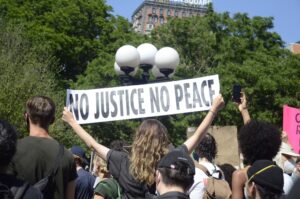
George Floyd protest in Union Square, May 30 2020. Credit balkanpress
PARIS / MILAN / MADRID — A volatile wave of youth-led and cost-of-living demonstrations has swept across Europe, forcing several governments to implement emergency security measures, overnight curfews, and military deployments. Fueled by severe housing shortages, systemic inflation, and a worsening energy crisis, what began as localized student walkouts has rapidly expanded into a broader continental flashpoint.
France Imposes Curfews Amid Escalating Unrest
In France, the movement initially triggered by deteriorating conditions in schools and rising fuel prices drew more than 500,000 demonstrators over the weekend. While the vast majority marched peacefully, intense clashes erupted in major urban centers. In response to widespread looting and property damage, Prime Minister Sébastien Lecornu announced strict overnight curfews across central Paris—including the Place de la République and Les Halles—as well as heavily impacted sectors in Marseille, Nice, and Lyon.
Addressing the nation, President Emmanuel Macron heavily criticized foreign politicians for weaponizing the unrest, warning against the spread of AI-generated “fake videos” designed to distort the ground reality for external political gain.
Italy Approves Emergency Measures and Troop Deployments
The unrest has rapidly spilled across borders into Italy, where a demonstration of over 5,000 people in Milan descended into violent confrontations with law enforcement. Authorities confirmed that more than 250 individuals were detained, a significant majority of whom are minors.
Faced with mounting pressure, Prime Minister Giorgia Meloni’s cabinet approved an emergency security package. The measures include deploying 500 troops to secure Milan, creating a distinct legal offense for participating in violent demonstrations, and introducing strict legislation holding parents financially liable for acts of vandalism committed by minors.
Housing Grievances and Political Backlash
Further south, the driving force behind the unrest shifts entirely toward structural economic strain. In Madrid and Lisbon, thousands of protesters took to the streets to denounce a severe housing affordability crisis. In Spain, a massive tent city has occupied central Madrid, catalyzed by the high-profile eviction of an elderly resident who has since become a national symbol for housing rights. Meanwhile, in Portugal, demonstrators clashed with riot police following operations to dismantle urban protest camps.
Political analysts warn that the timing of the unrest is critical. With pivotal elections approaching in Spain, France, and Italy, opposition and far-right parties are increasingly utilizing the protest violence to push hardline anti-immigration and authoritarian platforms, framing the current crisis as a fundamental failure of prevailing domestic policies.
Academic Revolts in the Balkans and Belgium
In Albania, a week-long “horizontal revolt” led by high school and university students has brought the capital city of Tirana to a partial standstill. Protesters demanding the resignation of Prime Minister Edi Rama over tuition costs, infrastructure neglect, and corruption have faced daily tear gas deployments from riot police. Concurrently, in Brussels, hundreds of students have clashed with authorities over proposed public spending cuts and higher education reforms, highlighting a growing generational divide across the continent.
As the “Angry Autumn” intensifies, European leaders face the dual challenge of restoring public order through enhanced policing while managing the deep-seated macroeconomic grievances threatening regional stability.
About The Author